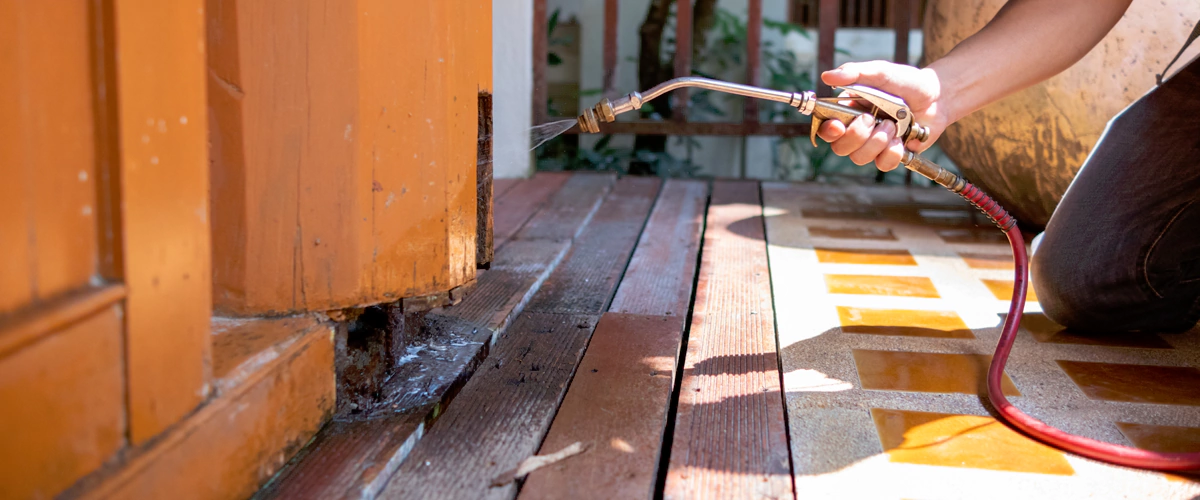
Termites may look tiny and harmless. However, they can ruin an entire home. They make wood become hollow, furniture collapse, and structural beams weaken. By the time you notice, the damage may already have become extreme.
But the question is, should you take the challenge alone? Or should you call in a professional? Which termite pest control method should you go for? The decision requires careful thought.
Let’s put this in perspective!
First things first—
Why Termites Are a Nightmare
- Never sleep
- Target wood, books, insulation, and paper
- Thrive in damp soil
- Tunnel through hidden spaces
- Breed quickly. (Colonies may hold thousands or millions, in worst cases.)
Also Read – Preconstruction Termite Treatment – Why is it Important?
Popular Termite Control Methods
1. Soil Treatments
Soil treatments create a barrier that blocks termites from entering. Professionals often inject liquid termiticides around the foundation, which the soil absorbs. So, when termites touch the soil, they perish immediately.
This method works well for new construction, but it is less effective for older homes without trenching.
2. Baiting Systems
Baiting systems use strategic traps.
Stations are placed around the property, and each station contains cellulose mixed with slow-acting poison. Termites feed on it and carry poison back to the colony. The poison spreads, eventually collapsing the entire colony.
This method requires patience, as termites need time to share the bait. Results may take months.
3. Direct Wood Treatments
4. Fumigation
Fumigation covers the entire home. A tent seals the structure, gas fills the space, and termites suffocate inside. Slowly, the entire colony dies. This method works well for severe infestations. It wipes out drywood termites.
However, it requires professional handling and forces families to leave for days.
5. Natural Remedies
- Orange oil contains compounds toxic to termites.
- Neem oil disrupts growth cycles.
- Vinegar solutions irritate them.
- Diatomaceous earth slices their bodies.
Do-It-Yourself Termite Control
DIY termite control appeals to many homeowners because it promises savings and independence. You can get sprays, foams, and powders from stores and use online guides for solutions.
Honestly, they do work well for prevention.
- Sealing cracks stops entry.
- Reducing moisture cuts attraction.
- Removing rotting wood denies food.
- Treating exposed beams adds protection.
Nevertheless, DIY has limits. Hidden colonies escape notice. Termites dig deep tunnels. Chemicals may not reach the heart of the problem. Overuse of chemicals harms soil and plants. Mistakes create risks for pets and children.
So, the truth is that DIY only delays the inevitable. Homeowners think the problem is solved, while colonies continue underground. By the time reality strikes, damage worsens.
Why Professionals Often Win the Battle
- Thermal scanners detect hidden colonies.
- Moisture meters reveal damp areas.
Cost Considerations
Cost often drives the decision.
DIY appears cheaper, and a weekend project seems easy. But it comes with its set of challenges that may be hard to handle on your own. Professional services, on the other hand, may cost more upfront. Yet, comparing cost with reduced risk of damage, this is a much profitable route.
Your final choice depends on your abilities, preferences, and budgetary restraints.
Also Read – How Long Does Pre-Construction Termite Treatment Last?
Prevention Is Better Than Cure
- Eliminate moisture.
- Fix leaky pipes.
- Keep gutters clean.
- Maintain proper drainage.
- Avoid wood piles near walls.
- Ventilate crawl spaces.
Should You Hire a Professional?
The answer depends on the situation.
A tiny infestation may suit DIY. For example, natural sprays may handle one corner or borate treatment may be enough for one beam. A widespread infestation, however, demands expertise. Some hints of significant termite presence:
- Mud tubes across walls suggest hidden colonies.
- Hollow flooring signals severe damage.
- Multiple swarms confirm large nests.
In such cases, professional help is wise.
Professionals deliver peace of mind by reducing risks of misdiagnosis and incomplete treatment. They also handle toxic chemicals responsibly and provide warranties. So, homeowners must weigh their priorities carefully before coming to a conclusion.
Final Thoughts
Termites are one of the most intrusive pests. They never stop eating, and they never stop causing damage. So, owners must take quick action.
Control methods exist in many forms. But you must ensure that a particular method is the right fit for your case. Should you have any doubt, you must talk to your pest controller right away and clear the confusion. This kind of proactive mindset is what homeowners need during a pest management project.
If you need more help in this regard, connect with our team at Oz Pest. We deliver the best in the industry, so you can enjoy your peace of mind.